Personalized Support for Every Stage of Your Reproductive Journey
Reproductive health and family planning are about choice, timing, safety, and empowerment—whether you are preventing pregnancy, preparing your body for the future, actively trying to conceive, or preserving fertility for later in life.
According to the Centers for Disease Control and Prevention (CDC), nearly half of all U.S. pregnancies are unplanned, often because women lacked access to timely, personalized contraceptive counseling. At the same time, the National Institutes of Health (NIH) reports that fertility declines earlier than most women realize—often beginning in the early 30s.
Family planning care allows you to prevent pregnancy safely and effectively, protect your long-term fertility, optimize health before conception, reduce pregnancy complications, and make informed decisions for your future.
Contraception Counseling
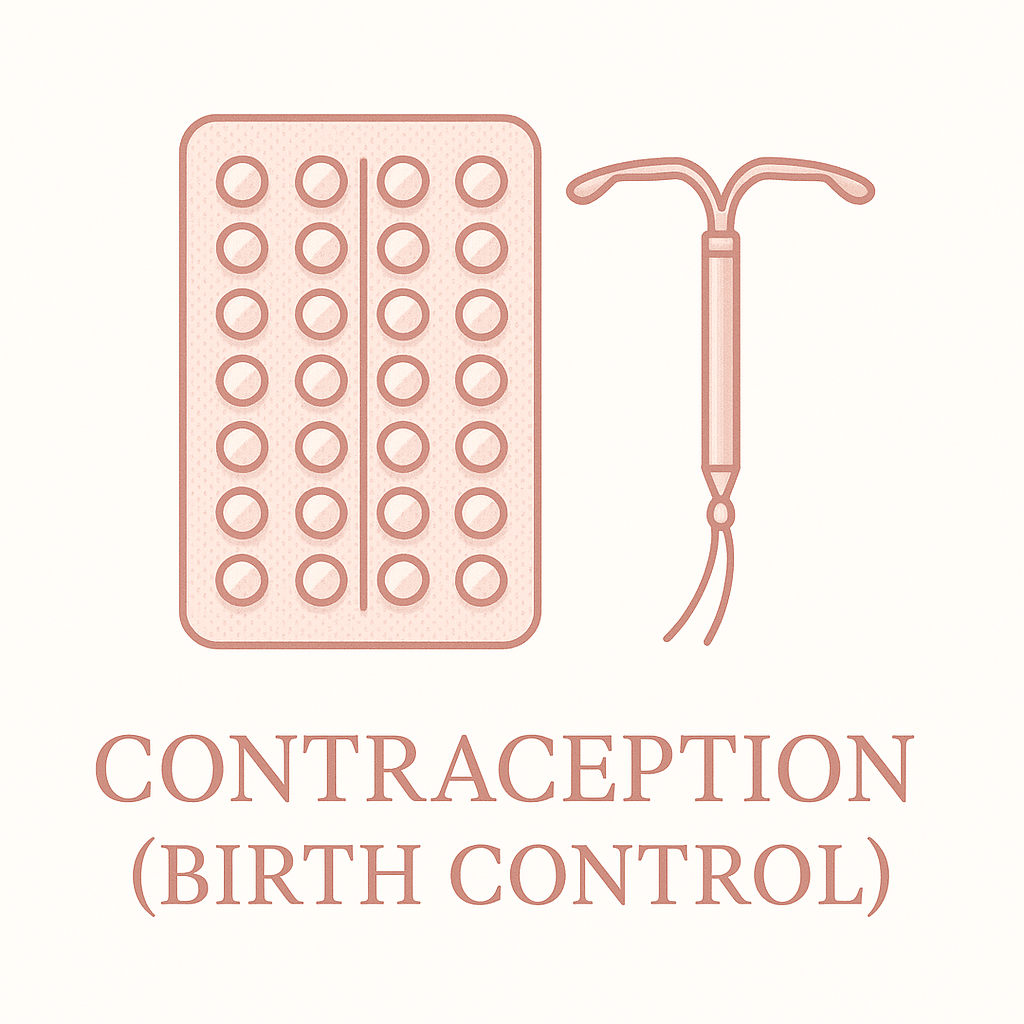
What it is: A personalized conversation about your health history, your goals (pregnancy now, later, or never), your comfort with hormones vs. non-hormonal options, and your lifestyle, cycles, and medical risks.
Why it matters: According to the CDC, nearly 65% of reproductive-aged women currently use some form of contraception. Typical-use failure rates vary widely between methods. Effective counseling dramatically reduces unplanned pregnancy, method failure, and hormone-related complications.
When neglected: Women are often placed on birth control that doesn't match their hormones, migraines, clotting risk, weight sensitivity, or fertility goals—leading to side effects, fear, and unnecessary discontinuation.
Birth Control Pills, Patch & Ring
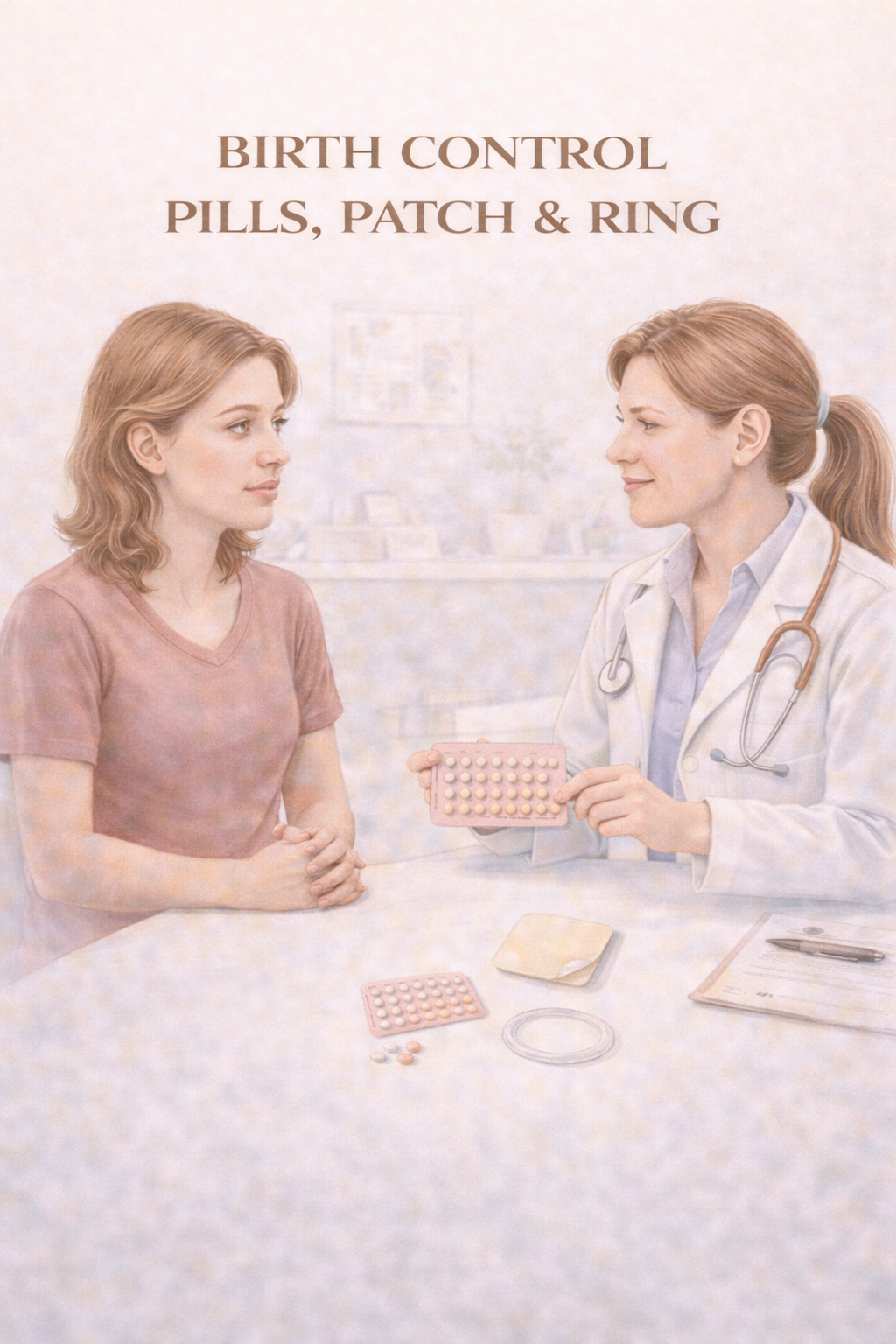
What they are: Hormonal contraceptives that prevent ovulation and regulate cycles.
Why they matter: According to the CDC and ACOG, with perfect use, these methods are over 99% effective. With typical use (real-life use), effectiveness is closer to 91%. Beyond pregnancy prevention, they help treat heavy bleeding, painful periods, acne, endometriosis, and PCOS-related irregular cycles.
When neglected: Incorrect selection or poor follow-up increases risks of breakthrough bleeding, migraines, blood clots (in select high-risk women), and unintended pregnancy.
IUD Placement & Removal
What it is: Intrauterine devices (hormonal and non-hormonal) that provide long-term, reversible pregnancy prevention.
Why it matters: According to the CDC, IUDs are over 99% effective and are among the most effective reversible contraceptives available. Fertility returns almost immediately after removal. Hormonal IUDs also treat heavy menstrual bleeding, anemia, painful periods, and endometriosis-related symptoms.
When neglected: Many women unnecessarily struggle with daily pills or heavy bleeding when IUDs could safely provide both contraception and symptom control for 3–10 years.
Nexplanon Implant Services
What it is: A small hormone-releasing implant placed under the skin of the upper arm that prevents pregnancy for up to 3 years.
Why it matters: According to the CDC, Nexplanon is over 99% effective and has one of the lowest pregnancy rates of all contraceptive methods. It is especially useful for young patients, women who cannot tolerate estrogen, and those who want "set it and forget it" protection.
When neglected: Without long-acting protection, women relying on short-acting methods have significantly higher failure rates due to missed doses.
Emergency Contraception
What it is: Medication used after unprotected intercourse to reduce the risk of pregnancy.
Why it matters: According to the CDC and ACOG, emergency contraception can reduce pregnancy risk by up to 85% when taken promptly. It is not an abortion pill, does not affect an existing pregnancy, and is used after missed pills, condom failure, sexual assault, or unprotected intercourse.
When neglected: Delays in access increase unplanned pregnancy risk and emotional distress.
Preconception Counseling
What it is: A medical evaluation before trying to conceive to optimize your health.
Why it matters: According to ACOG and the CDC, preconception care reduces miscarriage risk, lowers rates of preterm birth, decreases birth defects, and identifies silent risks like diabetes, thyroid disease, anemia, high blood pressure, and vitamin deficiencies.
When neglected: Many women discover chronic health conditions only after pregnancy complications occur, when risks to both mother and baby are higher.
Fertility Preservation Counseling
What it is: Education and planning for future fertility through egg freezing, embryo freezing, or fertility protection during medical treatments.
Why it matters: According to the American Society for Reproductive Medicine (ASRM), female fertility begins to decline noticeably in the early 30s, and egg quality and quantity decline more rapidly after age 35. Fertility preservation allows women to delay pregnancy safely, protect fertility before cancer treatments, and preserve reproductive autonomy.
When neglected: Many women only learn about fertility decline after difficulty conceiving—when options may already be limited.
Pregnancy Planning & Health Optimization
What it is: Targeted preparation for a healthy pregnancy through medication review, weight optimization, vitamin and folic acid supplementation, control of chronic conditions, and infection screening.
Why it matters: According to the CDC, chronic conditions like diabetes and hypertension significantly increase risks of preeclampsia, preterm birth, stillbirth, and cesarean delivery. Health optimization before pregnancy improves implantation success, placental development, fetal growth, and labor outcomes.
When neglected: Uncontrolled medical conditions at conception increase pregnancy complications that could have been prevented.
Genetic Carrier Screening
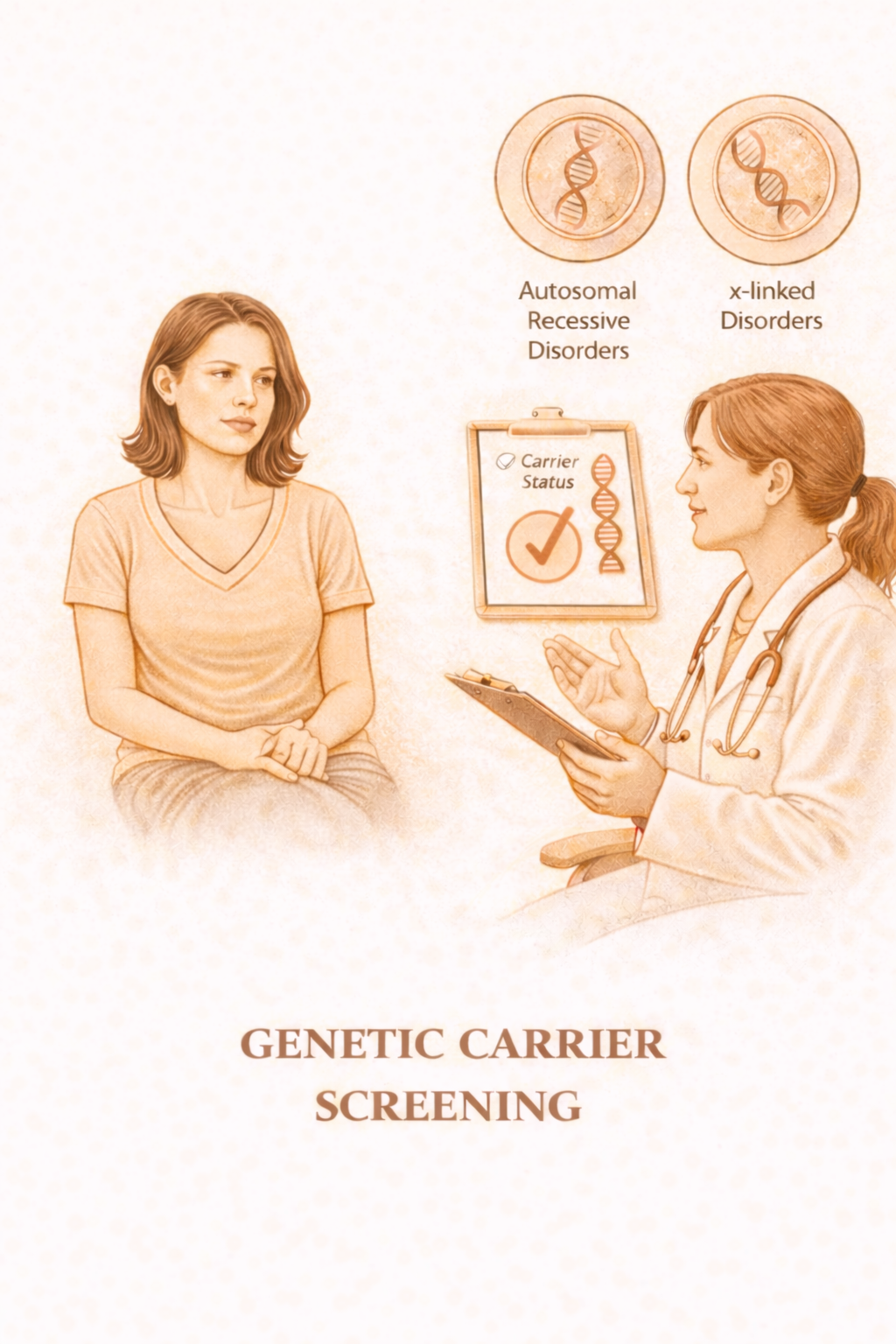
What it is: Blood or saliva testing to identify whether you carry genes for inherited conditions—even if you are healthy.
Why it matters: According to the CDC and ACOG, about 1 in 100 couples are at increased risk of having a child with a serious inherited disorder. Many carriers have no symptoms and no known family history. Common screened conditions include cystic fibrosis, spinal muscular atrophy, sickle cell disease, and Fragile X syndrome.
When neglected: Genetic conditions are often discovered only after a child is affected, when emotional, medical, and financial burdens are far greater.
Reproductive health and family planning empower you to make informed choices about your body, your timeline, and your future—on your terms.
Book an appointment with us to discuss your reproductive health & family planning needs
Call us at (703) 864-8244 or schedule online
Book Now